

How Janusz Kamiński Made It in Hollywood as Spielberg’s Go-To Cinematographer
I still remember the moment it clicked. I was rewatching Schindler’s List a few months after moving to Poland, then walking through the streets of Kazimierz in Kraków the next day. The stairwells, the grey light, the blown-out windows. That’s when I realised: the guy who made those images isn’t some Hollywood insider born in Beverly Hills. Janusz Kamiński grew up in Ziębice, a small town near Wrocław that most Poles would struggle to place on a map.
Here’s what fascinates me about his story. Poland constantly gets boxed into narratives of suffering, war trauma, and emigration desperation. And yes, Kamiński left during the Solidarity strikes in 1981. But his career isn’t a sob story. It’s a grind story. The kind where you shoot a Vanilla Ice movie before you ever touch an Oscar.
This article breaks down how Janusz Kamiński built his career from communist-era Poland through Chicago film school into becoming Steven Spielberg’s regular cinematographer on more than 20 films. I’ll explain what his visual style actually looks like, why it makes more sense once you’ve spent a winter in Wrocław, and what his path says about Poland as a place that quietly exports world-class creatives. At EXPATSPOLAND, we talk a lot about famous Poles you didn’t realise were Polish. Kamiński might be the biggest name most film fans couldn’t pin on a map.
Let’s get into it.
Key Takeaways
- Janusz Kamiński grew up in communist Poland, left during the Solidarity turmoil in 1981, and built his career through Chicago film school, AFI, and years of B-movie grind before Spielberg ever called.
- Steven Spielberg’s regular cinematographer since Schindler’s List (1993), he’s won two Academy Awards and earned five more nominations across films from Saving Private Ryan to West Side Story.
- His cinematography style leans into harsh contrast, controlled chaos, backlight obsession, and deliberate imperfections that feel very Polish once you’ve walked through a January morning in Lower Silesia.
- His story matters for expats in Poland because it shows how this “forgotten” country quietly produces some of the best cinematographers on the planet, right alongside other famous Poles who’ve reshaped their industries abroad.
Who Is Janusz Kamiński? Quick facts you actually care about
Janusz Zygmunt Kamiński is a Polish-American cinematographer and director, born on June 27, 1959, in Ziębice, Poland. He’s been Steven Spielberg’s primary director of photography since 1993, shooting everything from historical dramas to science fiction to musicals. People even misspell his name as Janusz Kaminsky, but the ń matters if you’re trying to pronounce it correctly.
Here’s the snapshot:
- Two Academy Awards: Best Cinematography for Schindler’s List (1994) and Saving Private Ryan (1999).
- Five additional Oscar nominations: Amistad, The Diving Bell and the Butterfly, War Horse, Lincoln, and West Side Story.
- 20+ films with Spielberg: The collaboration count reached 20 by The Fabelmans (2022), according to the Los Angeles Times.
- Emigrated to the US in 1981 as a political refugee, eventually settling in Chicago.
He’s consistently ranked among the best cinematographers working today, and his visual fingerprint shapes what “a Spielberg film” looks like. But he didn’t start at the top. Not even close.
From Ziębice to Chicago: growing up in Poland and leaving during the strikes
Kamiński was raised in Wrocław, in the Lower Silesia region of Poland. If you’ve spent time there, you know the light. Grey skies, heavy winters, concrete blocks, and streets that photograph beautifully in black and white without you trying. That’s the Poland he grew up in: late communist-era PRL, where the Solidarity movement was building steam and the government was cracking down.
In 1980, Kamiński was on a trip to Greece when he learned about the escalating strikes back home. Rather than return to an increasingly unstable Poland, he made a choice that thousands of Poles in that era faced: get out while you can. He sought political asylum, spent time in Vienna, and eventually landed in the United States in 1981.
This context matters. During my time living in Poland, I’ve met plenty of older Poles who tell very similar stories. “I left in the 80s” is a sentence you hear over pierogi. Some came back after 1989. Many didn’t. The weight of that era, the strikes, the Catholic Church in communist Poland serving as the main opposition force, the grey streets, the scarcity, all of that shaped a generation. And it shaped Kamiński’s eye.
In Polish, cinematography is often called “operator’s work” (praca operatorska). The Polish film school tradition, especially at Łódź, trained some of the most technically rigorous DPs in the world. Kamiński didn’t study at Łódź, but he came from a culture that took the craft seriously, a culture where imperfection, harshness, and honesty in images weren’t aesthetic choices. They were reality.
Chicago, AFI, and the grind: how Janusz Kaminski became a Hollywood cinematographer
So how does a political refugee from Poland end up behind the camera on the biggest films of the 1990s and 2000s? The short answer: grind. The long answer involves Chicago, film school, Roger Corman, and a Vanilla Ice movie.
Film school years in Chicago and Los Angeles
After arriving in the US, Kamiński eventually settled in Chicago and enrolled at Columbia College Chicago in 1982. He graduated with a BA in 1987. The famous anecdote from those years? He didn’t even intend to become a cinematographer. In his first class, students had to pull sticks to determine their roles. He pulled the camera stick by accident, and as he later said, “I liked the whole thing with the camera that you could actually put your hands on.”
After Columbia, he moved to Los Angeles to attend the American Film Institute as a Cinematography Fellow. That’s where the real Hollywood apprenticeship began.
If you’re an expat in Poland now thinking about film school, this is the template. It’s not genius. It’s showing up, learning on the job, and sticking around long enough until someone notices.
Roger Corman’s B-movies and the Cool as Ice era
Before Spielberg, there was Corman. Roger Corman’s low-budget “film factory” was notorious for churning out cheap genre movies while training future Hollywood legends. Kamiński joined the ranks of future visionaries who came up through Corman’s operation.
He worked as a key grip on Not of This Earth (1988), then gradually moved into cinematography on various B-movie projects, including horror sequels and low-budget sci-fi. And yes, he was the Cool as Ice cinematographer, shooting that infamous 1991 Vanilla Ice vehicle. It flopped. Nobody cared.
But here’s the thing: those years taught him to work fast, light cheaply, and survive low-budget madness. You don’t wake up as the Schindler’s List cinematographer. You first shoot Cool as Ice.
Spielberg finds his cinematographer: from Wildflower to Schindler’s List
The break came from television. In 1991, Kamiński shot Wildflower, a TV movie directed by Diane Keaton. It wasn’t a blockbuster, but someone important was watching.
The Wildflower TV movie and Class of ’61
According to the American Society of Cinematographers, “Steven watches a lot of television and caught Wild Flower, which was directed by Diane Keaton, on Lifetime. The next day, I received his phone call offering me the [Amblin-produced Civil War] TV movie Class Of ’61.”
That’s how it happened. Spielberg saw something in Kamiński’s work, liked the raw, honest quality, and brought him on for a TV project in 1993. Class of ’61 led directly to Schindler’s List.
The fragility of this moment is worth noting. One cable TV viewing. One phone call. The entire trajectory of modern Hollywood cinematography pivoted on that.
Schindler’s List and the decision for black-and-white
Kamiński returned to Poland twelve years after leaving as a refugee to photograph Spielberg’s Holocaust drama. The irony wasn’t lost on him. The Schindler’s List cinematographer had grown up walking streets that looked exactly like the frames they were now creating.
The decision to shoot in black-and-white wasn’t arbitrary. Kamiński drew on influences like Roman Vishniac’s pre-war Jewish photography and Robert Capa’s wartime imagery. As he described it, “Schindler’s List was shot in a very crude technical manner. We were kind of aiming toward imperfection, little so-called ‘flaws’ that might be considered mistakes, such as handheld shots in scenes that would normally be shot on the dolly.”
That deliberate ugliness, that refusal to make suffering look beautiful, became his signature. And it felt familiar. I’ve walked past those same kinds of stairwells in Kraków. The visual language isn’t invented. It’s remembered.
Saving Private Ryan and the raw D-Day images
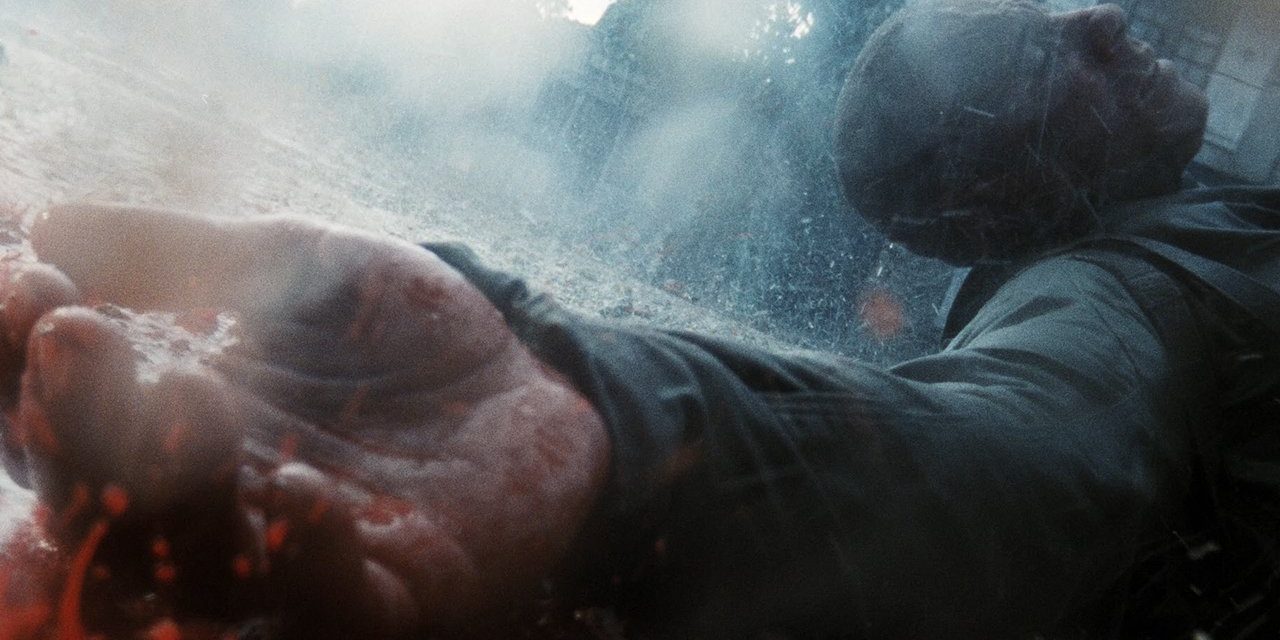
Five years later, Kamiński pushed even further with Saving Private Ryan. The Omaha Beach sequence redefined war cinematography. He used a 45-degree shutter angle to create that stuttering, almost strobe-like motion. Handheld cameras. Desaturated palette. Total chaos.
The Saving Private Ryan cinematographer essentially wrote the template that every “gritty war film” since has tried to imitate. That look wasn’t digital correction. It was achieved in-camera and through bleach-bypass processing in the lab. He knew what the final image would look like because he planned for it from the start.
If you’ve ever noticed how the country’s more downbeat side shapes its visual culture, this is where it shows up. Poles don’t fetishise prettiness. They trust ugliness to tell truth.
Janusz Kaminski cinematography style explained like you’re on a Polish film set
So what actually makes his work distinctive? If you pause any Spielberg film from the last 30 years and look at the lighting, you’ll start seeing patterns.
High contrast, backlight, and deliberate “ugliness”
As StudioBinder’s analysis notes, “Janusz Kamiński movies have certain calling cards: high contrast, strong backlighting, but not one of them looks the same.”
He loves shooting into the light. Windows blow out. Smoke fills the frame. Grain shows. In Polish film school circles, students obsess over that backlight look, partly because it references older Polish and European cinema traditions where you work with available light rather than against it.
The “ugliness” isn’t accidental. He’s on record preferring what he calls “de-glamorised images.” That’s a choice rooted in a sensibility that distrusts Hollywood perfection.
Bleach bypass, ENR, and desaturated futurism
For films like Amistad and Minority Report, Kamiński used silver-retention processes (including Technicolor’s ENR) to heighten contrast and mute colour. As he explained to American Cinematographer, “I found that the ENR becomes very slick and elegant if you don’t flash it. It’s very beautiful, but if you flash 10 or 15 percent it becomes grittier, which was the look I wanted for the story.”
On Minority Report, he zagged when everyone else was imitating Blade Runner. He opted for cool blues and metallic grays rather than warm neon. The result is a film “suffused with an impersonal coldness,” which fit the surveillance-state dystopia perfectly.
Still obsessed with film: The Fabelmans and West Side Story
Even in an era where most productions have gone digital, Kamiński and Spielberg still shoot on film. For The Fabelmans (2022), he used KODAK 35mm, 16mm and 8mm film, specifically choosing KODAK VISION3 500T for interiors and 50D for day exteriors.
“Even now, after all of these years and so many movies, Steven still loves the elegance of film aesthetics,” Kamiński said. That commitment to texture, to the imperfection of emulsion, to grain you can feel, it’s increasingly rare in Hollywood. But it’s why his images don’t look like everyone else’s.
Cinematographer turned director: Lost Souls, Hania, and why he went back to the camera
Kamiński didn’t just want to shoot films. He wanted to direct them. In 2000, he made his feature directorial debut with Lost Souls, a supernatural horror film starring Winona Ryder.
It didn’t go well. The film had a $28 million budget and received a disastrous reception both critically and commercially. As box office reports noted, “Kaminski planned on directing every few years, but after the disastrous reception of Lost Souls, he went back to his successful cinematography career.”
He later directed Hania (2007), a Polish-language family film that received mixed reviews. Neither project launched a directing career.
Here’s the honest takeaway for aspiring filmmakers: failure doesn’t kill a career if your base skill is world-class. Kamiński could afford to try directing, fail publicly, and return to cinematography without losing his reputation. His shooting work was so good that one bad horror movie didn’t matter. That’s the kind of cushion expertise gives you.
Awards, nominations, and why people call him one of the best cinematographers
The awards pile speaks for itself:
- Academy Awards (wins): Schindler’s List (1994), Saving Private Ryan (1999)
- Academy Awards (nominations): Amistad (1998), The Diving Bell and the Butterfly (2008), War Horse (2012), Lincoln (2013), West Side Story (2022)
- BAFTA wins and nominations: Including a win for Schindler’s List
Beyond Spielberg, his work on Julian Schnabel’s The Diving Bell and the Butterfly (2007) showed he could bring the same intensity to non-Spielberg projects. That film earned him one of his Oscar nominations and proved his style wasn’t just “Spielberg’s look.” It was his own.
When Polish news sites write about “our man in Hollywood,” they’re talking about Kamiński. His name gets mentioned alongside one of Poland’s best-known actresses and other internationally recognised Polish creatives who’ve proven that Poland exports more than history lessons.
What Janusz Kamiński’s story says about Poland today
I think about Kamiński when I meet older Poles who left in the 1980s, and when I meet younger Polish creatives who are choosing to stay, or who left for London and are now coming back to Warsaw. The story arc is familiar: Poland as a place people fled, Poland as a place people return to, Poland as a place that quietly produces heavyweights.
Lower Silesia claims him as a cultural asset. Culture.pl profiles him. When Poles talk about Polish success abroad, his name comes up alongside scientists, musicians, and athletes.
What strikes me most, living here, is the connection between his visual style and the actual environment. The high contrast, the love of imperfection, the refusal to prettify, it all makes more sense when you’ve spent a winter walking through concrete housing blocks under flat grey light. His cinematography isn’t “inspired by” Poland in some vague way. It looks like Poland.
If you’re a foreigner in Poland thinking the country is small or marginal, look at Kamiński’s filmography. Someone from Ziębice reshaped what blockbuster films look like. That’s not marginal. That’s central.
For more context on Poland’s cultural background and why creative talent keeps emerging from unexpected places, we cover these threads regularly at EXPATSPOLAND.
FAQs about Janusz Kamiński
Who is Steven Spielberg’s cinematographer?
Janusz Kamiński has been Steven Spielberg’s primary cinematographer since 1993, starting with Schindler’s List. As of The Fabelmans (2022), they’ve collaborated on 20 feature films together. He’s won two Academy Awards for Best Cinematography, both for Spielberg projects.
How many Oscars does Janusz Kamiński have?
He has two Oscar wins: Schindler’s List (1994) and Saving Private Ryan (1999). He’s been nominated five additional times for Amistad, The Diving Bell and the Butterfly, War Horse, Lincoln, and West Side Story.
What are the most famous Janusz Kamiński movies?
His most acclaimed Janusz Kamiński movies include Schindler’s List, Saving Private Ryan, Amistad, Minority Report, The Diving Bell and the Butterfly, Lincoln, West Side Story, and The Fabelmans. Beyond Spielberg, his work with Julian Schnabel on The Diving Bell is particularly celebrated.
Did Janusz Kamiński direct any movies?
Yes, he’s a cinematographer turned director. He directed Lost Souls (2000), a supernatural horror film that flopped both critically and commercially. He also directed the Polish-language film Hania (2007). After these experiences, he returned primarily to cinematography work.
What is Janusz Kamiński’s religion?
This comes up in searches, so I’ll address it directly: Kamiński doesn’t publicly foreground his religious beliefs. He grew up in Poland during a time when Catholic identity and communist power clashed constantly, but he’s never made his personal faith a public topic. I won’t speculate. If you want context on how religion in Poland shaped that generation’s experience, we’ve covered it elsewhere.
Has Janusz Kamiński made a Winged Hussar movie?
People search “winged hussar movie” with his name attached, probably hoping for a Polish historical epic at his visual scale. As of this writing, there’s no widely released Kamiński-shot winged hussar blockbuster. Projects shift constantly in Hollywood, so it’s worth checking current news. If you’re curious about the Polish Winged Hussars themselves, that history is worth the read regardless.
Conclusion
Janusz Kamiński’s career is proof that world-class talent can emerge from anywhere, including a small town in communist-era Poland that most people couldn’t find on a map. His path from Ziębice to Chicago to Spielberg’s set wasn’t glamorous or fast. It was grind, B-movies, lucky breaks, and a visual sensibility shaped by grey Polish light that he’s never lost.
If you’re in Poland now, whether as an expat or considering moving to Poland, his story offers a useful counterweight to the narrative that Poland is only about history and suffering. It’s also about people who leave, come back (even if just through their work), and reshape global culture from the periphery.
Next time you watch a Spielberg film and notice the blown-out windows, the harsh backlight, the deliberate imperfection, know where that comes from. It comes from Poland.
Meta Title: Janusz Kamiński: Spielberg’s Polish Cinematographer
Meta Description: How Janusz Kamiński went from communist Poland to Hollywood, becoming Spielberg’s go-to cinematographer with 2 Oscars and 20+ films together.
